
The forecast shows thunderstorms all week, your carefully planned outdoor team retreat just got moved inside at the last minute, and you’re staring at a sterile conference room wondering how on earth you’re going to create the energy and connection your team desperately needs. Maybe you’re dealing with another brutal winter, managing a distributed team that needs to connect virtually, or simply working in an urban environment where outdoor options feel about as realistic as finding a unicorn.
Indoor team building activities often get written off as boring alternatives to outdoor adventures, but that’s completely missing the point. Indoor settings offer consistent conditions, accessible facilities, and creative possibilities that outdoor activities simply can’t match when you really think about it. The trick is leveraging these advantages rather than treating indoor activities like consolation prizes that nobody actually wants to do.
High-Energy Indoor Team Building Games
1. Office Olympics
Transform conference rooms into competition venues using everyday supplies that are probably sitting in your supply closet right now. Include events like paper airplane contests, rubber band shooting galleries, stapler relays, and desk chair racing. These activities generate genuine laughter while encouraging friendly competition that brings out people’s personalities.
2. Human Knot Challenges
Have teams form circles, grab hands with non-adjacent people, then work together to untangle without letting go. This classic activity builds communication skills while providing physical movement and shared problem-solving that gets everyone engaged and maybe slightly dizzy.
3. Indoor Scavenger Hunts
Design elaborate hunts throughout office buildings or event venues that take advantage of every nook and cranny. Include riddles leading to different locations, photo challenges, and tasks requiring collaboration with other departments or teams—way more interesting than sitting around a table talking about synergy.
4. Escape Room Simulations
Create DIY escape rooms using office spaces and creative props that don’t require a massive budget. Hide clues, design puzzles, and set time limits that require teams to communicate effectively and think creatively under pressure—skills that directly transfer to workplace challenges.
5. Minute-to-Win-It Tournaments
Organize rapid-fire challenges using common materials—stacking cups, moving cotton balls with straws, or building towers with marshmallows and toothpicks. These create instant energy while accommodating different skill levels and getting people moving without requiring athletic ability.
Creative Indoor Team Bonding Activities
6. Innovation Workshops
Provide teams with random materials and challenge them to create solutions to hypothetical problems that might actually be useful. This encourages creative thinking while building collaboration skills through hands-on project work that produces tangible results people can be proud of.
7. Team Logo Design Contests
Have groups create visual representations of their team identity using art supplies, computers, or craft materials available in most offices. This builds shared identity while revealing different creative approaches and talents that people might not know about each other.
8. Cooking Team Challenges
Use kitchen facilities or portable cooking equipment for team-based culinary competitions that bring out everyone’s competitive side. Assign mystery ingredients, time limits, and collaborative cooking requirements that mirror workplace project dynamics while producing something everyone can actually eat.
9. Storytelling Circles
Create collaborative narratives where team members contribute to ongoing stories using prompts, props, or constraints that keep things interesting. This encourages creativity while building on each other’s contributions—skills that transfer directly to collaborative work projects.
10. Indoor Photography Projects
Assign teams creative photography challenges within the venue—capturing abstract concepts, documenting team personality, or creating visual stories that represent organizational values. It’s surprising how creative people get when they’re limited to indoor spaces and everyday objects.
Strategic Indoor Team Activities
11. Business Simulation Games
Use board games or digital simulations that mirror real business challenges involving strategy and teamwork. Include resource management, strategic planning, and competitive elements that build analytical thinking and collaboration without feeling like another boring training session.
12. Problem-Solving Workshops
Present teams with complex scenarios requiring systematic analysis and collaborative solutions that they might actually encounter at work. Include real workplace challenges that provide practical value alongside team building benefits—killing two birds with one stone.
13. Debate Tournaments
Organize structured debates on relevant professional topics that people actually care about. Rotate team compositions and argument sides to build communication skills while exposing participants to different perspectives they might not have considered before.
14. Strategy Planning Sessions
Facilitate collaborative planning exercises where teams develop solutions to actual organizational challenges that have been sitting on someone’s to-do list. This combines team building with genuine business value and strategic thinking that benefits everyone involved.
15. Case Study Competitions
Present multiple business scenarios requiring analysis, discussion, and presentation skills that people use in their real jobs. Include elements that require different team members to contribute expertise while building collective understanding of complex problems.
Interactive Indoor Team Building Ideas
16. Virtual Reality Adventures
Use VR headsets for shared gaming experiences that require communication and coordination in ways people have never experienced before. These cutting-edge activities create memorable experiences while building teamwork in digital environments that feel completely different from normal work.
17. Interactive Trivia Events
Host technology-enhanced trivia using audience response systems, team collaboration tools, and multimedia presentations that go beyond basic Q&A. Include company history, industry knowledge, and team member facts that people actually want to learn about.
18. Digital Collaboration Projects
Use online tools to create shared documents, presentations, or creative projects that require real-time collaboration and communication across team members. These build digital collaboration skills while creating something useful for the organization.
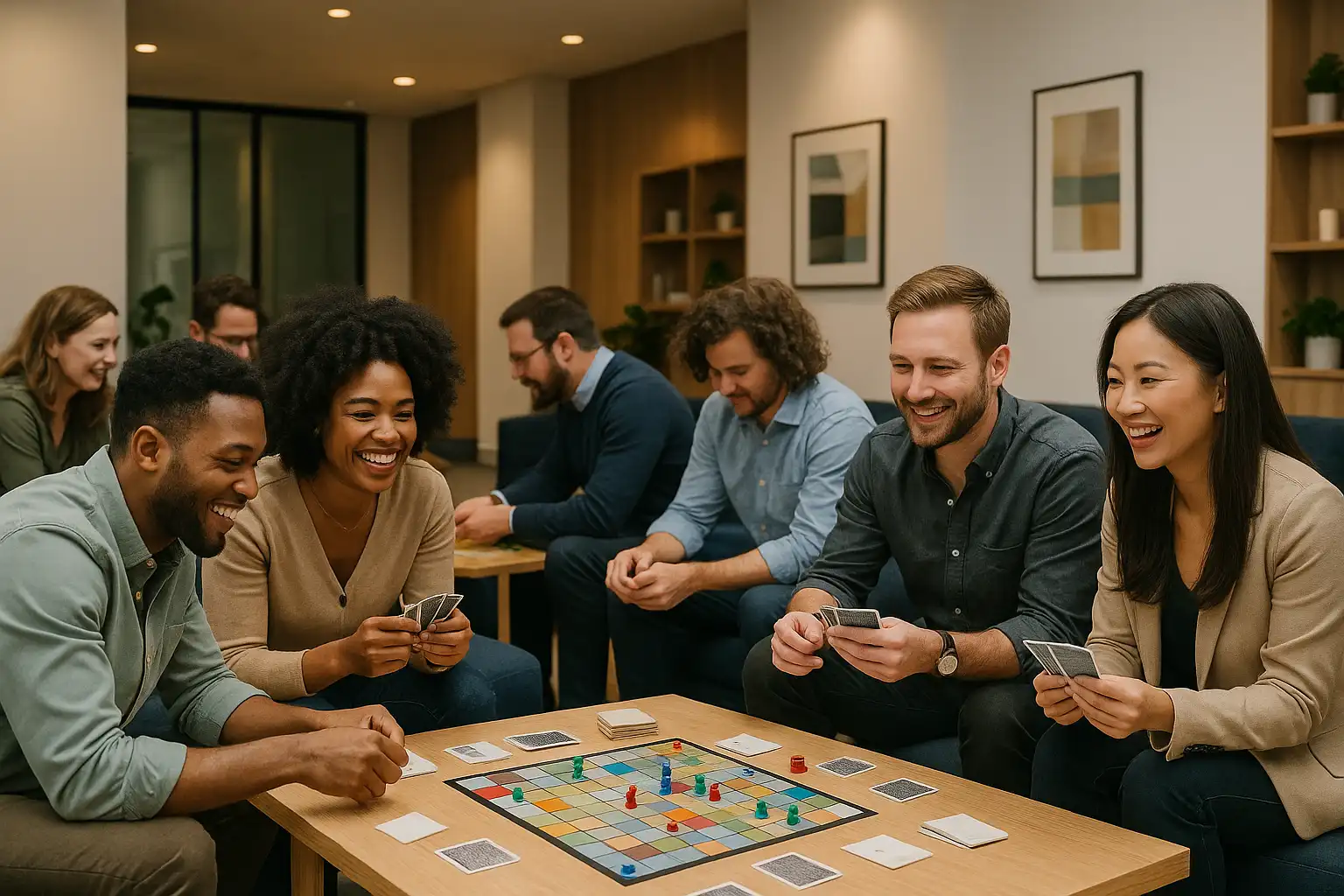
19. Board Game Tournaments
Organize structured competitions using strategy games that require teamwork, communication, and collaborative decision-making under time pressure. Rotate partnerships to ensure broad interaction patterns that help people work with colleagues they don’t usually collaborate with.
20. Indoor Team Sports
Adapt sports for indoor spaces—indoor volleyball, basketball shooting contests, or modified soccer using soft equipment that accommodates space constraints while providing physical activity that gets everyone’s blood moving and energy up.
Making Indoor Activities Actually Work
Effective indoor team bonding activities require thoughtful space management that maximizes available areas while ensuring safety and comfort for everyone involved. Consider furniture arrangement, traffic flow, and acoustic considerations that can make or break activity success—nobody wants to play games while shouting over the air conditioning.
Multi-purpose spaces can be transformed through creative setup and props that don’t cost a fortune. Conference rooms become game arenas, break rooms turn into collaboration spaces, and lobbies provide venues for larger group activities with minimal additional investment beyond some imagination and basic supplies.
Managing Energy in Indoor Environments
Indoor settings can feel constrained compared to outdoor spaces, so successful activities must intentionally create energy and movement that gets people engaged. Include physical elements, varied pacing, and environmental changes that prevent the stagnation that happens when everyone’s sitting around the same table all day.
Lighting, music, and decoration can dramatically transform indoor spaces to support different activity types and energy levels. Consider how environmental factors affect mood and engagement, then adjust settings to support your team building objectives rather than fighting against boring office vibes.
Technology and Indoor Team Building
Modern indoor team bonding games can leverage technology to create experiences that outdoor settings simply cannot support effectively. Interactive displays, wireless presentation systems, and collaboration apps enable sophisticated team challenges that combine digital and physical elements in creative ways.
Virtual and augmented reality technologies provide immersive experiences that transport teams to different environments while maintaining indoor comfort and control. These tools create memorable experiences that outdoor activities cannot replicate, especially when weather or location constraints limit outdoor options.
Conclusion
Indoor team building activities offer unique advantages that outdoor alternatives simply cannot match when you really think about it—consistency regardless of weather, accessibility for all team members, and creative possibilities that transform ordinary spaces into extraordinary team building experiences. Rather than viewing indoor activities as backup plans when outdoor options fall through, embrace them as strategic choices that provide specific benefits for team development.
The key to successful indoor team bonding activities lies in leveraging environmental advantages while creating energy and engagement that rivals any outdoor adventure. Focus on activities that maximize space utility, incorporate movement and variety, and build genuine connections between team members that last long after everyone returns to their regular workstations. With creative planning and strategic execution, indoor team building games can deliver powerful relationship building, skill development, and organizational culture improvements that prove weather is never actually a barrier to great team building.
Frequently Asked Questions
Q: Can indoor team building be as effective as outdoor activities? A: Absolutely! Indoor activities offer unique advantages like consistent conditions, better accessibility, and technology integration that outdoor settings can’t match. Success depends on thoughtful design rather than location—great team building is about connection and collaboration, not fresh air.
Q: What space requirements are needed for effective indoor team building? A: Most activities can adapt to available space pretty easily. Conference rooms work great for 6-12 people, while larger venues accommodate bigger groups. Focus on flexible activities that can scale to your space rather than requiring specific square footage that you might not have.
Q: How do you create energy in indoor environments that might feel sterile? A: Use music, varied lighting, physical movement, and environmental changes like rearranging furniture or adding decorations. Include high-energy games, rotate between different activity types, and transform spaces to maintain engagement that keeps people interested and involved.
Q: What’s the budget range for indoor team building activities? A: Costs vary widely from free activities using office supplies to $50-150 per person for elaborate facilitated events. Many effective indoor activities require minimal investment in materials and creativity rather than expensive venues or equipment that breaks the budget.
Q: How do you adapt indoor activities for different group sizes? A: Design scalable activities with breakout options for large groups and intensive collaboration for small teams. Use rotation systems, multiple activity stations, and flexible participation formats that accommodate your specific group size rather than forcing people into activities that don’t fit.
Looking for Outdoor Team Building Activities? Check out 20 Exciting Outdoor Team Building Activities That Build Stronger Teams!